
Real-time Ultrasound
Real-Time Ultrasound (RTUS) is a safe, non-invasive imaging technique that can offer more detail or an additional perspective as a part of your personalized treatment plan. At Calibrate, some of our physiotherapists use RTUS as a part of their physiotherapy assessment and treatment plan. RTUS can offer a different perspective alongside our hands-on assessment, helping us to better understand your individual anatomy and how your muscles are functioning.
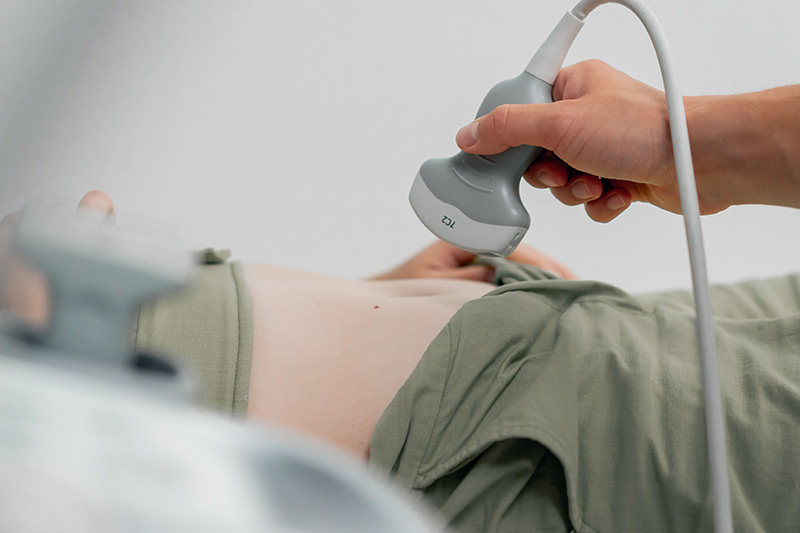
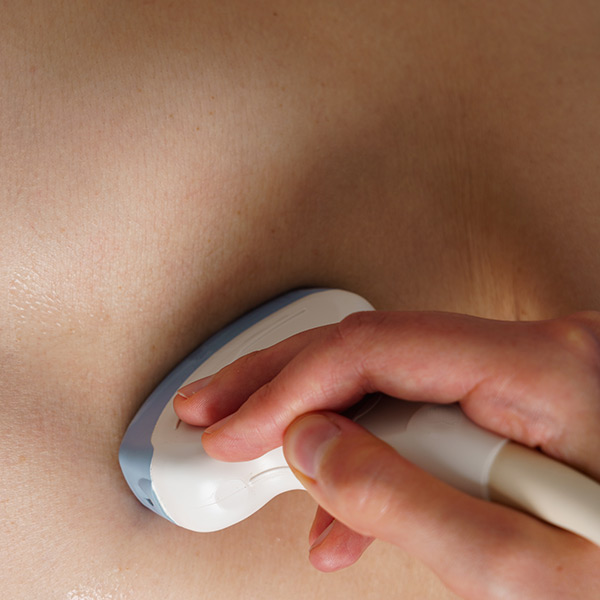
RTUS can help us visualize:
- How well different muscles coordinate together
- Pressure dynamics in the abdomen
- Assess what is changing (or not changing) overtime as we progress through your treatment plan.
Additionally it can be a valuable biofeedback tool since you can see your muscles working in real-time. This can help improve body awareness, retrain the brain and help to develop more optimal muscle activation patterns.
RTUS is not a stand alone assessment or treatment – it is one tool used within our comprehensive physiotherapy approach. It can support the clinical hands-on assessment and treatment plan development. It is used as a part of our whole-body approach. If you are curious whether RTUS may be helpful in your rehabilitation journey, speak with one of our physiotherapists to learn more.
Frequently Asked Questions
Who can benefit from real-time ultrasound?
It can be a useful tool for those who need guidance on activating and retraining specific muscles, especially the deep or hard to feel muscles. It is commonly used for core retraining, pelvic floor rehabilitation (overactive bladder, prolapse, incontinence) back or pelvic pain and pregnancy & postpartum. It can be helpful for clients who do best with visual feedback or who do not want an internal pelvic floor exam. Your physiotherapist will determine if RTUS is right for your individual needs.
Is real-time ultrasound safe?
Yes – real-time ultrasound uses high-frequency sound waves and does not involve radiation, making it a safe and non-invasive way to assess muscle activation and movement patterns. It is safe to use during pregnancy.
What should I expect if RTUS is used in my session?
During a RTUS assessment, your physiotherapist will apply a small ultrasound probe over the skin with ultrasound gel to view your muscles on screen in real time. You may be asked to gently activate certain muscles to see how they fire and coordinate. This visual feedback can help to guide more effective exercise & retraining.
Is Real-time Ultrasound the same as diagnostic ultrasound?
Not exactly. Diagnostic ultrasound – complete in a medical imaging setting – is used to image structures and pathology. RTUS in physiotherapy is focused on muscle activation and movement retraining.